GripNews (@GripNews@mastodon.social)
🌘 UltraPlot:Matplotlib 的簡潔封裝
➤ 用更少的程式碼,繪製更驚豔的圖表
✤ https://github.com/Ultraplot/UltraPlot
UltraPlot 是一個用於 Matplotlib 的簡潔 Python 封裝,旨在讓使用者能以更少的程式碼建立精美、具出版品質的圖形。它建立在 ProPlot 的基礎上,支援最新的 Matplotlib 版本 (3.9.0+),並提供直觀的介面來處理複雜的多面板佈局、笛卡爾座標繪圖、地理投影、顏色條、圖例、嵌入式圖和顏色循環等。UltraPlot 可透過 pip 或 conda 安裝,並提供詳細的文件和範例。
+ 太棒了!這個封裝讓 Matplotlib 的學習曲線變得平緩許多,而且產出的圖表質感真的很高。
+ 期待看到它未來在學術發表上的應用,簡潔的語法對於需要快速產出多張圖的研究者來說是一大福音。
#Python #資料視覺化 #Matplotlib #繪圖函式庫
Show Original Post
n1 (@n1@fosstodon.org)
Finally really good document digger and data extractor.
https://github.com/Goldziher/kreuzberg
Show Original Post
AdamOnza (@AdamOnza@mastodon.online)
Expanding my MK lang compiler.
BTW, It's called Viktor, after Viktor Toth, an amazing coder, and collector of calculators, like the MK series.
His language W is one of my favorites. I once bootstrapped it using #QBASIC!🕶️ I have a #Python translation, but it has a bug I can't find.
I've examined the Tetris game, by Dmitry Morgunov (PMK 125) It is quite interesting.
One instruction, "FL0" is kind of crazy. I don't know how to describe it. Maybe the designers couldn't & just picked FL0!
Show Original Post
ct_Magazin (@ct_Magazin@social.heise.de)
Buchkritik: Quantencomputing für Profis
Mancher, der Quantenphysik erklärt, greift auf schwammige Vergleiche zurück. Kaveh Basharis Lehrbuch hingegen wendet sich an alle, die es genau wissen wollen.
#IT #Programmierung #Python #Quantencomputer #news
Show Original Post
Megaboz (@Megaboz@oldbytes.space)
Finally got a chance to watch the Python Documentary - they did a fantastic job with it, definitely give it a watch if you're interested. I remember first using Python about 15 years ago as a C++ loyalist and thinking "huh, this is neat" - fast forward to today and now it's such a huge part of my life. Most of the AI and data science I do at work, the courses I teach, the team I manage, personal projects - all of these things involve Python in some way. And though it has its quirks like any other language, I genuinely love programming in it - it's powerful yet beautiful in its simplicity.
https://www.youtube.com/watch?v=GfH4QL4VqJ0
Show Original Post
clonbg (@clonbg@masto.es)
Mi primer CRUD con Python https://myblog.clonbg.es/mi-primer-crud-con-python/ #Programación #Python #PyQT https://clonbg.es

Show Original Post
geraldew (@geraldew@fosstodon.org)
So this week's daft idea has been to create my own user account management GUI tool.
That's: in Python, for Linux - so rather niche.
Lessons so far:
- writing a system admin tool will really require being able to do the development in an admin account, not my usual user-only account.
- how to sensibly present a GUI for the combination of user accounts and groups, is not at all obvious.
- I really should have started this project years ago.
#Python #Programming
Show Original Post
teguhteja (@teguhteja@mastodon.social)
Unlock financial insights with the power of AI! Learn how to build your own devin ai financial dashboard in 9 steps. #DevinAI #FinancialDashboard #AI #Python #React #FastAPI
Show Original Post
ology (@ology@musician.social)
Ha! With my example in https://pypi.org/project/chord-progression-network/, I can produce abominations like this whole-tone chord thing. :D

Show Original Post
lachlan (@lachlan@mastodon.social)
If a highly customisable #python, #scrum or #agile utility actually sounds like something you'd be keen on using, I'd actually really love to know. v0.2 has a couple of significant design changes that would effect calling it as a library or creating your own templates, and I'd love some feedback on the design (probably in a week or two) before I merge it in.
But - `pip install scrummd` will already give you the scrum tool nobody asked for!
Show Original Post
anubhav (@anubhav@hachyderm.io)
Does anyone converts "MI.DB", Master Index Database, from ssd.jpl.nasa.gov, to a (memory efficient?) #Python data structure and/or SQLite database to do look ups of primary names; DASTCOM record; #NAIF_ID, & such?
The file, currently 71 MB, is fetched every day. It is converted to ~600 MB list of dict objects with reverse mappings.
For "MI.DB" <ftp://ssd.jpl.nasa.gov/pub/ssd/README.txt> has:
"Latest ASCII file "Master Index Database". Entries provide look-up data linking asteroids and comets to their location in the DASTCOM3 export database. Names, primary designations, alternate designations, and SPK ID numbers are linked to current DATSCOM3 record number. The file is updated hourly, as necessary."
#astronomy #JPL #NASA #software
Show Original Post
lachlan (@lachlan@mastodon.social)
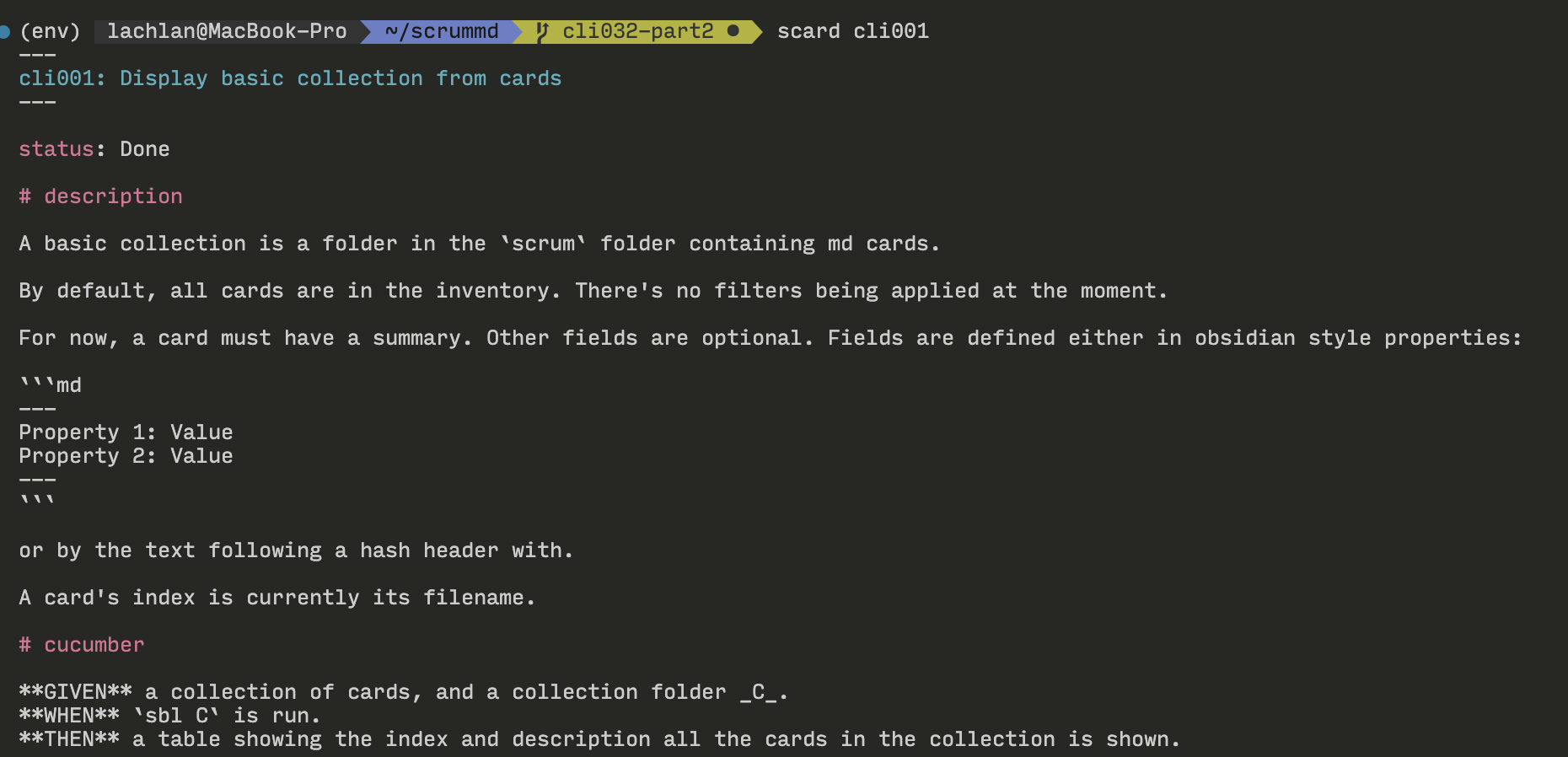
Sometimes, when coding your own thing, you do little things to make yourself happy even if it isn't _strictly in scope_ of the feature you're building.
I'm adding writing fields to #ScrumMD. I needed to rewrite the output code to make that work - which meant I'm moving (eventually) all output to Jinja2 templates rather.
And, to make me happy: I added ANSI color when using interactively to the new default template.
Show Original Post