2023 (@2023@voiceofeast.net)
Mexican-US Ties Are Deteriorating Due To Drug Indictments And Leaked Spy Reports
Mexican-US Ties Are Deteriorating Due To Drug Indictments And Leaked Spy Reports
In the face of Mexico’s inability to stop cartel-connected threats from spilling over its northern border, it makes perfect sense why the US would unilaterally infiltrate some of those infamous groups and spy on their communications. At the same time, however, this is indisputably a violation of Mexico’s sovereignty. Moreover, the US’ eavesdropping on the Mexican Armed Forces is an unfriendly action which shows how little the Pentagon trusts its counterparts.
The aftermath of last month’s abduction of four US citizens in Mexico led to the conclusion that “It’s Unlikely That The US & Mexico Will Ever Meaningfully Cooperate Against The Cartels”, hence why the US is taking unilateral action against them as proven by the latest drug indictments. The Department of Justice announced charges against leading cartel figures last week in a press release that also boasted about how “the DEA proactively infiltrated the Sinaloa Cartel and the Chapitos network”.
That particular disclosure prompted a furious reaction from Mexican President Andres Manuel Lopez Obrador, who’s popularly known by his initials as AMLO. He accused the US of “abusive interference”, condemned the presence of its “agents” in his country, and promised that there’ll never be any “submission” on his country’s part to its northern neighbor. At the same press conference, AMLO also lashed out at the latest Pentagon leaks about Mexico that were reported on several days prior.
The Washington Post informed their audience that not only was the US spying on the same cartel that abducted four of its citizens last month, but that it’s also eavesdropping on the Mexican military after one of the documents claimed that there are tensions between its Army and Navy over the Drug War. In response, AMLO accused the US of “espionage” and vowed to “safeguard information” from its Armed Forces. Quite clearly, Mexican-US relations have deteriorated in recent days due to these developments.
As was noted in the analysis that was hyperlinked to in the introduction, each country has legitimate interests, particularly with respect to ensuring their security from the interconnected unconventional threats posed by cartels, drugs, human trafficking, and violent crime. In the face of Mexico’s inability to stop the aforesaid from spilling over its northern border, it makes perfect sense why the US would unilaterally infiltrate some of those infamous groups and spy on their communications.
At the same time, however, this is indisputably a violation of Mexico’s sovereignty. Moreover, the US’ eavesdropping on the Mexican Armed Forces is an unfriendly action which shows how little the Pentagon trusts its counterparts. To be sure, Mexico probably has secret agents embedded in the US branches of its national cartels and is likely also spying on it far beyond that or at least attempting to, but its related operations almost certainly pale in comparison to the US’.
AMLO’s sharp criticism of the US’ interference in his country’s domestic affairs shows that he’s had enough of its meddling even if Mexico is unable to stop it. The power asymmetry between these two keeps his tangible reaction to all of this in check since he knows that there’s a risk of severe punishment if he crosses his neighbor’s “red lines”. Nevertheless, the optics are still worth analyzing because there’s no doubt that he’s making a public display of standing up to the US.
This will likely lead to part of the population rallying around him for patriotic reasons even if they dislike some of his domestic policies while having the opposite effect when it comes to Americans feeling increasingly uncomfortable with everything that’s going on in Mexico nowadays. The cartel-facilitated fentanyl crisis affects millions of people either directly with respect to them having someone close who’s overdosed from it and/or indirectly in terms of addicts driving local crime waves.
The more that AMLO condemns US law enforcement’s infiltration of the cartels and the Pentagon’s espionage operations against them, the more that Americans will begin to consider him a threat, thus potentially galvanizing public opinion in the direction of the same punitive measures he seeks to avert. The Republicans are already talking about designating cartels as terrorists and even speculating about cross-border strikes so this issue is expected to become a national one ahead of next year’s elections.
The aforementioned rhetoric will in turn accelerate the spread of patriotic sentiment in Mexico, with these dynamics contributing to each society viewing the other with maximum suspicion and as pressing national security threats, thus risking the emergence of a “security dilemma”. Should this concept come to characterize their bilateral ties, then the danger exists that the US might feel pressured by public opinion into unilaterally ordering some sort of action (even if mostly symbolic) against Mexico.
With or without this happening, public opinion in Mexico might pressure the government into doing something against the US too, even if this is (also?) mostly symbolic. In practice, it could flirt with comprehensively expanding economic ties with its Chinese rival exactly as Brazil’s Lula has sought to do as part of his envisaged “balancing” act between those two, however clumsily it’s ultimately executed. Mexico is right next to the US, however, so this could inadvertently provoke a major overreaction from it.
While the scenarios that were briefly described in the preceding two paragraphs remain speculative for the time being, there’s no denying that they’ll become increasingly possible the longer that Mexican-US tensions persist, especially if their bilateral ties come to be characterized by a “security dilemma”. This trend could eventually have serous strategic consequences in the New Cold War if it spirals out of control, which is why observers should keep a close eye on everything going forward.
Disclaimer: The views expressed in this article are author’s own and do not necessarily reflect the editorial policy of Voice of East.
7 Courses in 1 – Diploma in Business Management

Show Original Post
guerra-in-ucraina-le-ragioni-e-le-soluzioni-secondo-noam-chomsky (@guerra-in-ucraina-le-ragioni-e-le-soluzioni-secondo-noam-chomsky@www.magozine.it)
Guerra in Ucraina: le ragioni e le soluzioni secondo Noam Chomsky
Indice dei contenuti
Toggle
- Perché l’Ucraina?
- Ruolo dell’Europa e della NATO nella guerra in Ucraina
- Putin nella guerra in Ucraina
- Guerra evitabile e soluzioni per la pace
- La politica di Biden con la Cina ed il rischio di un’altra guerra
- L’Europa è decisiva sia con la Russia che con la Cina
Traduzione a cura di Valentina Nicolì e Vincenzo Ostuni. Premessa di Valentina Nicolì.
La guerra in Ucraina sembra essere nata dal nulla, viene raccontata dai media in tempo reale ma non è permesso spiegarne la complessità delle ragioni storiche. Noam Chomsky lo fa egregiamente in questo libro senza cercare giustificazioni o attenuanti per il crimine di guerra che rappresenta l’invasione intrapresa da Putin.
Perché l’Ucraina?
Perché l’Ucraina è un libro straordinario per diverse ragioni. Innanzitutto il libro è la raccolta di sette interviste a Noam Chomsky, quasi tutte realizzate tra il febbraio e la fine di marzo del 2022. Perché l’Ucraina è il punto di vista di un grande pensatore su temi attualissimi, realizzato in tempo reale. Dall’ultima intervista (24 marzo) alla pubblicazione (21 aprile) è passato meno di un mese.
In secondo luogo Noam Chomsky è uno dei massimi esperti sul ruolo dei media in occidente ed uno dei maggiori critici della politica estera statunitense. Il suo è un pensiero lucidissimo, nonostante i suoi 93 anni, ed utilissimo a comprendere il ruolo degli Stati Uniti nella guerra russo-ucraina. Chomsky si definisce anarchico.
Le interviste che vanno a comporre questo libro, uscito in italiano in anteprima mondiale, sono sette. La prima intervista è di Valentina Nicolì realizzata nel dicembre 2018. Le altre sei interviste sono realizzate da C.J. Plychroniou per la rivista indipendente Truthout, dal 4 di febbraio, periodo precedente all’invasione russa, al 24 marzo 2022 e ci portano gradualmente dentro la guerra in Ucraina.
Ruolo dell’Europa e della NATO nella guerra in Ucraina
L’intervista del 2018 di Valentina Nicolì riguarda il ruolo dell’Europa e della Nato. Chomsky ripercorre la storia dell’Europa dal secondo dopoguerra ad oggi passando per De Gaulle, Willy Brandt e Gorbačëv. L’accordo che si raggiunse per l’unificazione della Germania prevedeva che la NATO non si espandesse verso Est. Era l’unica ragione per cui l’Unione Sovietica potesse fare questa concessione alla Germania divisa.
L’allargamento della NATO fino ai confini russi
Gli accordi furono mantenuti fino al 2008 quando Bill Clinton allargò la Nato fino ai confini con la Russia. Con Bush e Obama ci furono anche degli inviti all’Ucraina ad entrare nella NATO. Secondo Chomsky la NATO è consapevole che l’Ucraina non farà mai parte dell’alleanza militare atlantica. Neanche dopo un’eventuale vittoria nella guerra russo-ucraina. La Russia non lo accetterebbe mai.
Il ruolo della Nato
Secondo Chomsky la NATO non avrebbe più senso di esistere, come alleanza militare, dopo la fine dell’Unione Sovietica. Chomsky riporta il pensiero dello storico inglese Richard Sakwa, professore di Politica europea e russa all’Università del Kent, secondo cui la Nato si giustifica col bisogno di gestire le minacce provocate dal suo allargamento.
In questo modo la NATO si è trasformata in un’alleanza che ha lo scopo di controllare le risorse energetiche mondiali ed è funzionale come supporto agli Stati Uniti nelle diverse operazioni speciali e missioni di pace occidentali.
Europa indipendente dalla NATO
Il più grande regalo che Putin ha fatto agli Stati Uniti con la guerra in Ucraina è stato quello di compattare gli stati europei nella NATO e di rafforzare l’egemonia statunitense nell’alleanza atlantica. Un’Europa indipendente dalla Nato, forza terza rispetto agli altri blocchi era il sogno di De Gaulle. Ma anche l’aspirazione di Michail Gorbačëv (Gorbaciov) che immaginava un sistema di sicurezza europeo che comprendesse la Russia.
Gli Stati Uniti hanno sempre osteggiato un’emancipazione europea dall’egemonia americana che spinge l’Europa verso un’economia caratterizzata da un capitalismo estremo. Chomsky ricorda il caso del Cile del 1973 quando gli Stati Uniti insediarono il dittatore Pinochet e uccisero il presidente Allende. Lo scopo, secondo Kissinger, era quello di eliminare quell’esperienza di riforme sociali che poteva diventare un modello per Italia e Spagna.
Eppure un precedente dell’affrancamento potrebbe essere costituito oggi dall’iniziativa diplomatica di alcuni leader europei, Macron in particolare, per la ricerca di una soluzione che getti le basi per la pace tra Ucraina e Russia.
Putin nella guerra in Ucraina
La posizione della Russia è molto chiara. Putin non può accettare che Georgia e Ucraina entrino nella NATO, che ospitino esercitazioni militari NATO e vengano militarizzate dalla NATO. Se succedesse qualcosa del genere in Messico con forze armate russe o cinesi, sarebbe ugualmente inaccettabile per gli Stati Uniti.
Crimini di guerra e nazisti
Chomsky dichiara, senza nessuna ambiguità, che l’invasione russa dell’Ucraina è un crimine di guerra. Come l’invasione statunitense dell’Iraq e come l’invasione tedesca di Hitler della Polonia. Un crimine per il quale i gerarchi nazisti sono stati condannati all’impiccagione al Processo di Norimberga.
Guerra evitabile e soluzioni per la pace
La guerra, secondo Chomsky, era evitabile. Le condizioni che porteranno alla fine della guerra ed alla pace saranno le stesse che se realizzate prima, la guerra avrebbero potuto evitarla. A Putin non ci si deve arrendere e non bisogna concedere tutto. Ma le condizioni che si devono accettare a guerra in corso sono sicuramente peggiori di quelle che potevano cercarsi prima.
Tra le condizioni di pace ci saranno l’attuazione dei protocolli di Minsk che riconoscano una forma di autonomia per le repubbliche del Donbass all’interno di un’organizzazione federalista dell’Ucraina. Sistema federalista simile a quello statunitense. La smilitarizzazione e la neutralità dell’Ucraina sono parte essenziale delle condizioni.
Escalation: la guerra nucleare e la terza guerra mondiale
Non ci si deve arrendere ma bisogna concedere a Putin una via di fuga che gli permetta di uscire dalla guerra non completamente umiliato. La Russia è il paese con il maggior numero di testate nucleari ed una escalation della guerra sarebbe disastrosa e non avrebbe vincitori. Se vogliamo evitare la terza guerra mondiale o una guerra nucleare una soluzione, un compromesso va cercato. E non va cercato molto lontano da quelli che erano gli accordi di Minsk.
La politica di Biden con la Cina ed il rischio di un’altra guerra
Le sanzioni alla Russia hanno l’effetto di avvicinare la Russia alla Cina e di favorire, invece, gli Stati Uniti come fornitore di petrolio per i paesi europei. Nei confronti della Cina, inoltre, Biden sta portando avanti una politica di accerchiamento militare, simile a quello della Nato nei confronti della Russia.
Le ultime leggi di Biden in materia economica (National Defense Authorization Act del 27 dicembre 2021) hanno riservato, infatti, notevoli finanziamenti per l’acquisto di navi ed aerei e per la Pacific Deterrence Initiative per la difesa di Taiwan.
Chomsky ci invita a chiederci come si sentirebbe la Cina nel momento in cui gli Stati uniti raddoppiano la spesa per l’anno 2022 per l’installazione di missili ad alta precisione lungo la prima catene di isole (Giappone, Taiwan e Filippine).
L’Europa è decisiva sia con la Russia che con la Cina
Il ruolo dell’Europa è fondamentale in questo scenario internazionale. Se i paesi europei smettessero di accettare qualsiasi strategia militare e politica statunitense, avrebbero i requisiti per rappresentare una terza forza, di avere una propria politica internazionale e forse di scoraggiare i presidenti statunitensi da giochi pericolosi, sfruttando supremazia militare americana.
Inoltre, un affrancamento dell’Europa dagli Stati Uniti e dalla Nato libererebbe i paesi europei da quella morsa che li costringe a perseguire politiche economiche ispirate ad un estremo capitalismo neoliberista a favore, invece, di una socialdemocrazia con uno stato sociale che garantisca a lavoratori e fasce più deboli diritti essenziali e assistenza.
#chomsky #controinformazione #Europa #guerra #nato #Russia #ucraina #usa

Show Original Post
2022 (@2022@streetartutopia.com)
Sculpture dedicated to the memory of the victims of the Transatlantic slave trade at the entrance of the National Memorial for Peace And Justice
Sculpture Kwame Akoto-Bamfo Kwame Akoto-Bamfo is a Ghanaian sculptor. His outdoor sculpture ‘Nkyinkim’ is dedicated to the memory of the victims of the Transatlantic slave trade is on display at the National Memorial for Peace and Justice that opened in 2018 in Montgomery, Alabama, USA. Kwame Akoto-Bamfo: Thank you all for your unending support and for sharing in Ghana and worldwide. Lynching’s and slavery is a very uncomfortable topic for many, but someone has to talk about them. […]Show Original Post
2022 (@2022@voiceofeast.net)
Just How Credible Was Ukraine’s Nuclear Threat To Russia Prior To The Conflict?
Just How Credible Was Ukraine’s Nuclear Threat To Russia Prior To The Conflict? By Andrew KorybkoKnowing now that all of this was going on behind the scenes in the run-up to President Putin’s fateful 24 February announcement, the public should hopefully have a better idea of how international diplomacy really works. The world isn’t always privy to what’s secretly happening at the highest levels of interstate relations, which is why some developments like Russia’s special military operation in Ukraine come off as shocking but make perfect sense in hindsight.
President Putin explained the timing of his country’s special operation in Ukraine as being partially driven by the pressing nuclear threat that this neighbouring former Soviet Republic posed to Russia. These allegations have been dismissed by the US-led Western Mainstream Media (MSM) throughout the course of their ongoing information warfare campaign against that Eurasian Great Power but deserve some further elaboration since they’re definitely very credible. In fact, they arguably triggered the operation itself since Moscow was compelled to ensure the integrity of its national security red lines following Ukrainian President Zelensky’s innuendo at last month’s Munich Security Conference that his country was seriously contemplating the production of nuclear weapons.
The Russian leader warned on 24 February while announcing the special military operation in Ukraine that “If we look at the sequence of events and the incoming reports, the showdown between Russia and these forces cannot be avoided. It is only a matter of time. They are getting ready and waiting for the right moment. Moreover, they went as far as aspire to acquire nuclear weapons. We will not let this happen.” Foreign Minister Lavrov and other Russian officials like his spokeswoman Maria Zakharova have subsequently reminded the world of the threat that Ukraine’s nuclear intentions posed to their country. President Putin himself even brought the issue up again on Saturday while meeting with female aircrew members of Russian airlines. Here’s what he said:
“Now they are talking about gaining a nuclear status, that is, acquiring nuclear weapons. We cannot ignore such things either, especially because we know how the so-called West acts with regard to Russia. First, Ukraine has had nuclear competencies since the Soviet times. As far as enrichment and nuclear materials are concerned, they are capable of launching such projects. They have missile competencies. Suffice it to mention Yuzhmash – it created intercontinental ballistic missile equipment for the Soviet Union.
They can boost it and do it. And they will also receive help with that from across the ocean. And then they will say that we do not recognise their nuclear status, that they did it themselves, and they will put these systems under control, and from that moment, from that very second, Russia’s future will change dramatically. From then on, our strategic adversaries would not even need to have intercontinental ballistic missiles. They would be able to keep us at the nuclear gunpoint, and that would be it. But how can we let this go unnoticed? These are absolutely real threats, not some far-fetched nonsense.”
As the author explained in his piece about “Why It’s So Important For Russia To Denazify & Demilitarize The ‘Anti-Russia’”, a US-backed fascist Ukraine whose permanent military, intelligence, and diplomatic bureaucracies (“deep state”) are influenced by an ideology that literally preaches the need to exterminate their fraternal Russian neighbours would certainly launch a nuclear attack against that Eurasian Great Power upon obtaining such capabilities. An unnamed but presumably very high-profile and credible source that spoke to publicly funded TASS the day after President Putin’s earlier reported meeting revealed that “Ukrainian specialists could have made such a device within several months” and that they “initiated dialogue with foreign companies” to help create uranium enrichment facilities.
Another source contacted publicly funded RIA and informed them of more details about Ukraine’s secret US-backed nuclear weapons plans. According to them, they were experimenting with dirty bombs in Chernobyl, exploiting the preexisting radiation there as cover for their tests. Some also suspect that documents related to this program were previously stored at the Zaporozhskaya Nuclear Power Plant that Kiev’s fascist-nationalist forces recently tried provoking Russia to fire upon, after which they set part of it ablaze in their retreat, perhaps also to destroy evidence of their country’s illegal plans. More and more, the information that’s increasingly becoming available adds credence to President Putin’s concerns that Ukraine was on the cusp of becoming a US-backed nuclear weapons power.
Had Russia’s special operation not commenced when it did, it’s very possible that Kiev would have further intensified the third round of civil war hostilities in Donbass that it started the week prior and might have used that as the pretext for requesting direct US and NATO assistance, including that which would involve clandestinely protecting its nuclear weapons research facilities. Moscow essentially preempted this plot at the absolute very last minute through its decisive intervention in that neighbouring fascist-hijacked state, thus enabling the Russian Armed Forces (RAF) to destroy the West’s secret military infrastructure there that could have facilitated their landings in Ukraine as well as be put to use to conventionally attack Russia upon the neutralization of its nuclear second-strike capabilities.
President Putin remained tight-lipped about these impending threats to his country’s national security red lines in the two months since he shared his security guarantee proposals with the US and NATO. This veteran statesman knows how international diplomacy works and didn’t want to publicly raise the alarm about this Cuban Missile-like Crisis in the heart of Europe while still sincerely pursuing a peaceful political resolution to it. Openly talking about these very serious threats might have been spun by the MSM as the “unsubstantiated fearmongering of a deranged leader” and consequently torpedoed his high-level diplomacy with the West. Regrettably, his interlocutors didn’t take his warning seriously when he said that Russia would resort to military-technical means to ensure its national security if needed.
That’s why the whole world was shocked when he finally spilled the beans about this crisis on the morning of 24 February while detailing the exact nature of these threats in his address to the Russian people. Folks were shocked since they hadn’t realized just how close the world had come to a third global war that might very well have resulted in the extermination of all humanity. The MSM predictably spun everything exactly like they would have had he earlier revealed such details while the majority of his people rallied behind their patriotic leadership after understanding the existential nature of the threat from US-led NATO in Ukraine. It wasn’t just about neutralizing their country’s nuclear second-strike capabilities nor conventionally attacking it after, but also arming fascist Ukraine with nukes.
There should be no doubt among objective observers that Russia’s special mission in Ukraine is essentially a preemptive one aimed at averting World War III by ensuring that the US’ devious strategic security plans there connected to the three threats listed in the preceding sentence of the prior paragraph will never materialize. Knowing now that all of this was going on behind the scenes in the run-up to President Putin’s fateful 24 February announcement, the public should hopefully have a better idea of how international diplomacy really works. The world isn’t always privy to what’s secretly happening at the highest levels of interstate relations, which is why some developments come off as shocking but make perfect sense in hindsight.
Russia’s special operation in Ukraine is one such example and arguably the most significant one in several generations. Had Moscow not militarily acted in preemptive self-defence when it did, then that country would be likely already be well on the way to being nuclear blackmailed by Kiev and its Western patrons, especially if NATO dispatched forces to protect Ukraine’s secret nuclear weapons facilities under the pretext of “defending” it upon its proxy’s intensification of a third round of civil war hostilities in Donbass like Russian intelligence suspected was about to happen. Everything seems very tense and dangerous right now, but it would have been much worse had the special operation not been commenced. Russia literally just saved the world from an impending nuclear war in the near future.
Disclaimer: The views expressed in this article are author’s own and do not necessarily reflect the editorial policy of Voice of East.
7 Courses in 1 – Diploma in Business Management
#EU #Geopolitics #NATO #NuclearWar #Russia #Ukraine #USA #WW3
Show Original Post
2022 (@2022@streetartutopia.com)
TROMBONE PLAYER by Tom Bob in New York, USA
Street Artist Tom Bob TROMBONE PLAYER by Tom Bob at P.S. 020 Anna Silver School in New York, USA. More by Tom Bob: Street Art by creative genius Tom Bob (33 Photos) Video TROMBONE PLAYER by Tom Bob at P.S. 020 Anna Silver School in New York, USA. Photos: https://t.co/pIHznWk5sn pic.twitter.com/y3rK25NbCH— STREET ART UTOPIA: New Street Art and Graffiti (@traintoutopia) March 1, 2022 Comments: pic.twitter.com/VeTtTuRkud— STREET ART UTOPIA 🖼️ (@StreetArtUtopia) March 1, 2022https://streetartutopia.com/2022/03/01/trombone-player-by-tom-bob-in-new-york-usa/
Show Original Post
2022 (@2022@streetartutopia.com)
STOP WAR by Jef in Austin on the Russian invasion of Ukraine
Graffiti Artist Sef "STOP WAR" by Sef on the Russian invasion of Ukraine 2022. Mural made in Austin, Texas, USA. Comments: https://twitter.com/StreetArtUtopia/status/1497940372730699787https://streetartutopia.com/2022/02/27/stop-war-by-jef-in-austin-on-the-russian-invasion-of-ukraine/
Show Original Post
2022 (@2022@streetartutopia.com)
STOP WARS by Michael Murphy in in Worcester, Massachusetts
[youtube https://www.youtube.com/watch?v=xY4isUkyG04?version=3&rel=1&showsearch=0&showinfo=1&iv_load_policy=1&fs=1&hl=en-US&autohide=2&wmode=transparent&w=640&h=360]Artist Michael Murphy
By Michael Murphy in Worcester, Massachusetts, United States.
Comments:
STOP WARS by Michael Murphy in in Worcester, Massachusetts 🇺🇸 pic.twitter.com/5JmmZvUyoR
— STREET ART UTOPIA 🖼️ (@StreetArtUtopia) February 26, 2022
Show Original Post
2022 (@2022@streetartutopia.com)
Emile’s current mood: unflinching anticipation
[youtube https://www.youtube.com/watch?v=5C8HJvN0bkY?version=3&rel=1&showsearch=0&showinfo=1&iv_load_policy=1&fs=1&hl=en-US&autohide=2&wmode=transparent&w=640&h=360]Chalk Art by David Zinn
By David Zinn in Old West Side Historic District, Ann Arbor, Michigan, USA.
Comments:
Cute chalk art by @davidzinn_art pic.twitter.com/nCy6Z4SiW2
— STREET ART UTOPIA 🖼️ (@StreetArtUtopia) February 10, 2022
Show Original Post
2022 (@2022@streetartutopia.com)
10 photos: “The Majestic” mural by Yanoe and Zoueh in Tulsa, Oklahoma
Street Artists Yanoe and Zoueh “The Majestic” mural by Yanoe and Zoueh in Tulsa, Oklahoma, USA. Photos by Chop ‘em Down Films. Comments: (1/2) 10 photos: https://t.co/hEsgpeXcWI “The Majestic” mural by Yanoe and Zoueh in Tulsa, Oklahoma pic.twitter.com/LKvVqObYGn— STREET ART UTOPIA: New Street Art and Graffiti (@traintoutopia) January 19, 2022https://streetartutopia.com/2022/01/19/the-majestic-mural-by-yanoe-and-zoueh-in-tulsa-oklahoma/
Show Original Post
2022 (@2022@streetartutopia.com)
Happy Birthday to David Bowie
Street Artist Eduardo Kobra By Eduardo Kobra in Jersey City, New Jersey, USA. Comments: ★ Happy Birthday to David Bowie.★ pic.twitter.com/4rgSKjN4pj— STREET ART UTOPIA 🖼️ (@StreetArtUtopia) January 8, 2022https://streetartutopia.com/2022/01/09/happy-birthday-to-david-bowie/
Show Original Post
2021 (@2021@streetartutopia.com)
This welcoming sculpture at a truck stop tire store in CO
Comments: This welcoming sculpture at a truck stop tire store in CO pic.twitter.com/IMKsNvKLfg— STREET ART UTOPIA 🖼️ (@StreetArtUtopia) December 7, 2021https://streetartutopia.com/2021/12/09/this-welcoming-sculpture-at-a-truck-stop-tire-store-in-co/
Show Original Post
2021 (@2021@voiceofeast.net)
From “Absolutely Not” To Absolutely Not Sure?
From “Absolutely Not” To Absolutely Not Sure? And FATF’s Games
Experts Ahmed Quraishi, Hassan Aslam Shad and Shahid Raza analyse PM Imran Khan’s “Absolutely Not” comment on the use of Pakistan’s airspace for US’ operations in Afghanistan. Has there been such an agreement with the US govt? Watch this program to find out. FATF’s grey listing of Pakistan was also discussed in detail. Syeda Qudsiya Mashhadi moderated the session.
[youtube https://www.youtube.com/watch?v=Z_UZAzy8ZRI?version=3&rel=1&showsearch=0&showinfo=1&iv_load_policy=1&fs=1&hl=en-gb&autohide=2&wmode=transparent&w=700&h=394]Business Management – Beginner to Advanced
#Afghanistan #FATF #Geopolitics #ImranKhan #Pakistan #USA #video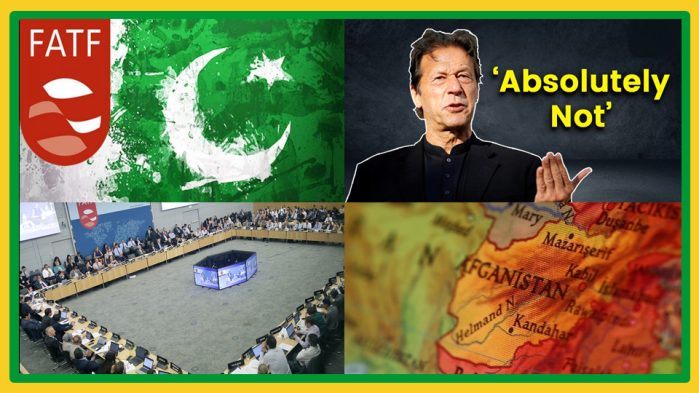
Show Original Post