madargon (@madargon@is-a.cat)
Sad illustration...
I had first vision for this after reading some chapters of "Permanent Record".
#drawing #comic #internet #freedom #privacy #corporations #socialmedia

Show Original Post
2022 (@2022@streetartutopia.com)
4 pics: My Fantastic Social Media Life vs Real Life – Mural on Will Smith Chris Rock in Berlin, Germany
Street Artist Eme Freethinker By Eme Freethinker in Berlin, Germany. Comments: pic.twitter.com/QI1k4bmaY0— STREET ART UTOPIA 🖼️ (@StreetArtUtopia) March 31, 2022Show Original Post
2021 (@2021@palmoildetectives.com)
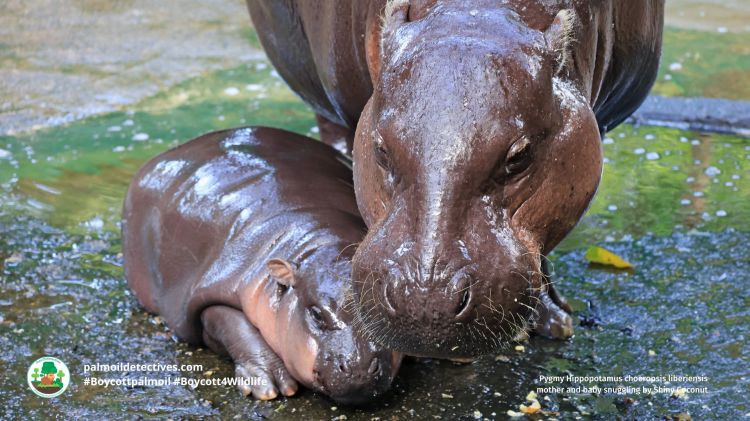
Pygmy Hippopotamus Choeropsis liberiensis
Pygmy Hippopotamus Choeropsis liberiensis
IUCN Status: Endangered
Location: The Pygmy Hippopotamus (Choeropsis liberiensis) is found in the dense forests, swamps, and riverbanks of West Africa, primarily in Liberia, Côte d’Ivoire, Sierra Leone, and Guinea. They rely on the remaining fragments of lowland rainforest, particularly near freshwater sources, where they navigate through dense undergrowth using well-worn trails.
In the dwindling rainforests of West Africa, a rare and secretive #hippo clings to survival. The Pygmy #Hippopotamus (Choeropsis liberiensis) is a shy, nocturnal #mammal dwelling in rivers, distinct from its larger, more familiar relative, the Common Hippopotamus (Hippopotamus amphibius). Long before chubby #MooDeng 🦛💔 the baby pygmy hippo chonk became a social media sensation, the forest habitat of the beautiful pygmy #Hippo 🦛of #Guinea #Liberia 🇱🇷 #Africa was being razed for #palmoil, #cocoa and other crops. Unlike their river-dwelling cousins, Pygmy Hippos are primarily solitary, roaming through dense tropical forests in search of food. Their populations have been devastated by relentless deforestation, hunting, and habitat fragmentation, leaving them teetering on the brink of extinction. They now endangered. Such beautiful creatures deserve to be saved! There are now fewer than 2,500 individuals remaining in the wild. Fight back and #BoycottPalmOil 🌴🪔🚫 #Boycott4Wildlife every time you shop!
The forest habitat of the beautiful pygmy #Hippo 🦛of #Guinea #Liberia 🇱🇷 #Africa is being razed for #palmoil and other crops. They now endangered. Such a beautiful creature deserves to be saved! Fight back and #BoycottPalmOil 🌴🪔🚫 #Boycott4Wildlife https://wp.me/pcFhgU-Qp
Share to BlueSky Share to TwitterLong before chubby #MooDeng 🦛💔 the baby pygmy #hippo chonk became an #socialmedia sensation, #Liberia’s #forests were being pulped for #palmoil #cocoa and #tobacco #agriculture 😡 Help her and 1000s of others to survive! Be #Vegan and #Boycott4Wildlife https://wp.me/pcFhgU-Qp
Share to BlueSky Share to TwitterShare to Twitter and BlueSky!
If chubby and cute pygmy #hippo 🦛named #MooDeng could talk, she’d tell us all to stop staring at her online and instead to take action to save her home! Sign the #petition, be #Vegan and🍓🌱 #Boycottpalmoil #Boycott4Wildlife 🌴🪔🚫 @palmoildetect https://wp.me/pcFhgU-97b
Share to BlueSky Share to TwitterSign petition
Sign PetitionAppearance and Behaviour
The Pygmy Hippopotamus is rarely seen because of their secretive, nocturnal habits and consequently not much is known of their ecology. This diminutive hippopotamus mainly inhabits lowland primary and secondary forests, close to rivers, streams and Raphia palm tree swamps sometimes being found along gallery forests extending into Transitional Woodland and the southern Guinea savanna.
Pygmy Hippos are significantly smaller than Common Hippos, standing only 70–80 cm tall at the shoulder and weighing between 180–270 kg (Saidu et al., 2022). Their compact bodies are adapted for navigating dense forests rather than open waterways. They possess smooth, hairless skin that secretes a natural mucus, acting as a protective barrier against dehydration and infection. This secretion has an unusual reddish tint, earning it the nickname “blood sweat,” though it has no connection to actual blood.
Unlike their gregarious relatives, Pygmy Hippos are solitary or found in pairs, with mothers keeping their calves hidden in secluded pools for extended periods. They are highly elusive and primarily active during twilight and nighttime hours. Camera traps in Liberia and Sierra Leone have shown that they move cautiously through forested wetlands, following well-worn trails that they mark with dung, a behaviour similar to that of their larger relatives.
Large areas of the original forest habitat, especially in Côte d’Ivoire, have been destroyed or degraded by commercial plantations of oil palm and other products, shifting cultivation, mining and logging, and hunting for bushmeat is increasing throughout the range (Mallon et al. 2011, FFI and FDA 2013).
IUCN Red List
Ecosystem Role
Pygmy Hippos play a crucial role in maintaining the health of forest ecosystems. By foraging on vegetation and dispersing seeds, they contribute to forest regeneration and seed dispersal. Their movements create pathways through dense undergrowth, benefiting other species by increasing habitat accessibility. However, their shrinking populations threaten these ecological functions, highlighting the importance of conservation efforts.
Predators
Few natural predators pose a significant threat to adult Pygmy Hippos, though young individuals are vulnerable to Leopards Panthera pardus, African Rock Pythons (Python sebae), and Nile Crocodiles Crocodylus niloticus. Camera trap evidence has also captured predation by African Golden Cats Caracal aurata and African Civet in some regions. However, human activity remains their greatest existential threat.
Threats
The Pygmy Hippopotamus Choeropsis liberiensis is facing a severe population decline due to habitat destruction, hunting, and increasing human pressures. Their remaining forested habitats are rapidly disappearing, leaving isolated populations vulnerable to extinction.
1. Deforestation and Habitat Loss
West Africa’s rainforests have been devastated by large-scale deforestation, with over 90% of the Upper Guinea Forest already lost. Shifting agriculture is the primary driver, with forests cleared at an accelerating rate to make way for crops and livestock. Expanding commercial plantations, particularly oil palm, rubber, and coffee, continue to erode remaining habitat. Mining operations, road construction, and infrastructure development have further fragmented the landscape, even encroaching into protected areas like Taï and Sapo National Parks. As human settlements expand, Pygmy Hippos are forced into smaller and more fragmented patches of forest, increasing their vulnerability.
2. Hunting and the Bushmeat Trade
Pygmy Hippos are increasingly being hunted, both opportunistically and for commercial sale. While not traditionally a primary target, they are killed for bushmeat in rural areas where alternative protein sources are scarce. Reports indicate that in some regions, commercial bushmeat markets have placed additional pressure on their populations. Their skulls, bones, and other body parts are sometimes used in traditional African medicine and spiritual practices. Additionally, free-ranging domestic dogs are known to attack and kill Pygmy Hippos, particularly young or weakened individuals.
3. Habitat Fragmentation and Isolation
The destruction of forest corridors has left Pygmy Hippo populations increasingly isolated, reducing genetic diversity and increasing the risk of local extinction. As forested areas continue to shrink, the lack of connectivity between populations means that even those in protected areas face long-term viability challenges. Habitat fragmentation also makes Pygmy Hippos more vulnerable to hunting, as roads and human settlements provide easier access to once-remote areas.
4. Competition with Humans and Livestock
With human populations in their range doubling every 20–30 years, there is ever-increasing pressure on natural resources. Domestic cattle increasingly compete with Pygmy Hippos for access to water sources, particularly during dry seasons. In many areas, pastoralists illegally graze their livestock inside national parks and reserves, further degrading critical Pygmy Hippo habitat. This competition not only depletes available resources but also increases human-wildlife conflict, often leading to retaliatory killings of Pygmy Hippos.
5. Climate Change and Environmental Pressures
Rising temperatures and prolonged dry seasons are altering the Pygmy Hippo’s habitat, reducing wetland areas essential for their survival. Changes in vegetation due to shifting rainfall patterns may further limit the availability of preferred food sources, forcing Pygmy Hippos to travel greater distances in search of sustenance. As forests become drier, wildfires pose an additional threat, accelerating habitat destruction and making remaining populations even more vulnerable.
Diet
Pygmy Hippos are herbivorous, feeding primarily on forest vegetation. They consume ferns, tender roots, leaves, and fruit from various trees and plants. Research from Tiwai Island, Sierra Leone, identified key food sources, including sweet potato leaves (Ipomoea batatas), cacao (Theobroma cacao), okra (Hibiscus esculentus), and creeping vines such as Geophila obvallata. Unlike Common Hippos, they are less dependent on aquatic vegetation and do not graze extensively on grasses.
Reproduction and Mating
Little is known about the reproductive behaviour of Pygmy Hippos in the wild. Captive studies indicate that they reach sexual maturity at around 4–5 years, with a gestation period of approximately 188 days (Lang, 1975; Tobler, 1991). Females typically give birth to a single calf, weighing between 4.5–6.2 kg. Unlike Common Hippos, Pygmy Hippos give birth on land, and calves are left hidden in secluded pools while their mothers forage (Galat-Luong, 1981).
Geographic Range
Historically, Pygmy Hippos ranged widely across West Africa, but their distribution has dramatically contracted. Today, they are found in fragmented populations in Liberia, Côte d’Ivoire, Sierra Leone, and Guinea, primarily within protected areas such as Taï National Park and Sapo National Park (Ransom, Robinson & Collen, 2015). They prefer lowland tropical forests near rivers and swamps, where dense vegetation provides cover.
FAQs
1. How many Pygmy Hippopotamuses are left in the wild?
The exact population size of the Pygmy Hippopotamus is unknown due to their elusive nature and dense forest habitat, but estimates suggest fewer than 2,500 individuals remain in the wild. Their numbers are rapidly declining due to habitat loss, hunting, and human encroachment.
2. Why are Pygmy Hippos endangered?
Pygmy Hippos are endangered primarily due to deforestation, which has destroyed over 90% of the Upper Guinea Forest, their primary habitat. Additional threats include hunting for bushmeat, competition with livestock for water, and climate change, which is altering their wetland habitats.
3. How do Pygmy Hippos differ from Common Hippos?
Unlike their larger relatives, Pygmy Hippos are more terrestrial, reclusive, and nocturnal. They are about half the size of Common Hippos, lack the same level of aggression, and are adapted to life in dense forests rather than open rivers and lakes.
4. What do Pygmy Hippos eat?
Pygmy Hippos are herbivores, feeding on a variety of plants, ferns, fruits, and aquatic vegetation. Their diet consists of tender roots, leaves, fallen fruit, and occasionally cultivated crops like sweet potatoes, okra, and cassava.
5. Do Pygmy Hippos live in groups?
No, Pygmy Hippos are mostly solitary animals. They only come together for mating or when a mother is raising her calf. Unlike Common Hippos, they do not form large social groups.
6. Where can you find Pygmy Hippos?
They are found in the forests and swamps of West Africa, specifically in Liberia, Côte d’Ivoire, Sierra Leone, and Guinea. Small, scattered populations may exist in protected areas like Taï National Park and Sapo National Park.
7. How do Pygmy Hippos mark their territory?
Pygmy Hippos use a unique method of territory marking by vigorously wagging their tail while defecating. This spreads their dung across trails and vegetation, signaling their presence to other individuals.
8. How long do Pygmy Hippos live?
In the wild, their lifespan is estimated to be around 30 years, while in captivity, they can live up to 40 years due to the absence of predators and consistent food availability.
9. Do Pygmy Hippos have predators?
Adult Pygmy Hippos have few natural predators due to their size, but young individuals are vulnerable to leopards, nile crocodiles, and African rock pythons. However, their greatest threat comes from human activities, including illegal poaching and habitat destruction.
10. Can Pygmy Hippos swim?
Yes, Pygmy Hippos are excellent swimmers and rely on water for hydration, temperature regulation, and protection from predators. However, they spend more time on land than Common Hippos and are well adapted to moving through dense forests.
11. Do Pygmy Hippos make sounds?
Pygmy Hippos communicate using a variety of sounds, including grunts, bellows, and squeaks. These vocalisations are used for warning others, mating calls, and communication between mothers and calves.
12. Are Pygmy Hippos aggressive?
Pygmy Hippos are not as aggressive as Common Hippos, but they are highly territorial and can be defensive if threatened. Their reclusive nature makes human encounters rare.
13. Are Pygmy Hippos good parents?
Yes, female Pygmy Hippos are very protective of their young. They hide their calves in dense vegetation or secluded pools while they forage, returning regularly to nurse them.
14. How do Pygmy Hippos reproduce?
Pygmy Hippos reach sexual maturity at around 3–5 years old. They have a gestation period of about six months, typically giving birth to a single calf. Twins are very rare.
15. How can we help save Pygmy Hippos?
The best way to help protect Pygmy Hippos is by supporting conservation efforts that focus on preserving their remaining rainforest habitat. Avoiding products linked to deforestation, such as palm oil, and supporting organisations working to stop illegal hunting and deforestation are crucial. Always choose products that are 100% palm oil-free to avoid contributing to biodiversity loss.
Take Action
The survival of Pygmy Hippos depends on urgent conservation action. Their habitat continues to vanish due to deforestation, mining, and agriculture. Individuals and organisations can help by:
• Boycotting palm oil to reduce habitat destruction.
• Supporting wildlife conservation efforts in West Africa, particularly initiatives that focus on habitat restoration and anti-poaching measures.
• Advocating for stronger enforcement of hunting bans and protection of remaining forest areas.
• Educating local communities on the importance of conserving Pygmy Hippos and providing alternative livelihoods to reduce hunting pressure.
Always choose products that are 100% palm oil-free to avoid contributing to deforestation and biodiversity loss.
Support the conservation of this species
Further Information
Avedik, A., & Clauss, M. (2023). Chewing, dentition and tooth wear in Hippopotamidae (Hippopotamus amphibius and Choeropsis liberiensis). PLOS ONE, 18(10), e0291825. https://doi.org/10.1371/journal.pone.0291825
Eltringham, S. K. (1999). The Hippos: Natural History and Conservation. Academic Press. https://books.google.com.au/books/about/The_Hippos.html
Erazo-Mera, E., Younes, N., Horwood, P. F., Paris, D., Paris, M., & Murray, N. (2023). Forest loss during 2000–2019 in pygmy hippopotamus (Choeropsis liberiensis) habitats was driven by shifting agriculture. Environmental Conservation, 51(1), 55-63. https://doi.org/10.1017/S0376892923000310
Ransom, C, Robinson, P.T. & Collen, B. 2015. Choeropsis liberiensis. The IUCN Red List of Threatened Species 2015: e.T10032A18567171. https://dx.doi.org/10.2305/IUCN.UK.2015-2.RLTS.T10032A18567171.en. Downloaded on 15 February 2021
Saidu, J. B., Adewumi, A. A., Lameed, G. A., & Udo, A. J. (2022). Food preference of pygmy hippopotamus (Choeropsis liberiensis) in the Tiwai Island edge communities, South-Eastern Sierra Leone. Environtropica, 17, 014-026. https://www.researchgate.net/publication/386552939
Pygmy Hippopotamus Choeropsis liberiensis
How can I help the #Boycott4Wildlife?
Take Action in Five Ways
1. Join the #Boycott4Wildlife on social media and subscribe to stay in the loop: Share posts from this website to your own network on Twitter, Mastadon, Instagram, Facebook and Youtube using the hashtags #Boycottpalmoil #Boycott4Wildlife.
2. Contribute stories: Academics, conservationists, scientists, indigenous rights advocates and animal rights advocates working to expose the corruption of the palm oil industry or to save animals can contribute stories to the website.
Mel Lumby: Dedicated Devotee to Borneo’s Living Beings
Anthropologist and Author Dr Sophie Chao
Health Physician Dr Evan Allen
The World’s Most Loved Cup: A Social, Ethical & Environmental History of Coffee by Aviary Doert
How do we stop the world’s ecosystems from going into a death spiral? A #SteadyState Economy
3. Supermarket sleuthing: Next time you’re in the supermarket, take photos of products containing palm oil. Share these to social media along with the hashtags to call out the greenwashing and ecocide of the brands who use palm oil. You can also take photos of palm oil free products and congratulate brands when they go palm oil free.
https://twitter.com/CuriousApe4/status/1526136783557529600?s=20
https://twitter.com/PhillDixon1/status/1749010345555788144?s=20
https://twitter.com/mugabe139/status/1678027567977078784?s=20
4. Take to the streets: Get in touch with Palm Oil Detectives to find out more.
5. Donate: Make a one-off or monthly donation to Palm Oil Detectives as a way of saying thank you and to help pay for ongoing running costs of the website and social media campaigns. Donate here
Pledge your support#Africa #Agriculture #Boycott4wildlife #BoycottPalmOil #cocoa #CoteDIvoire #EndangeredSpecies #forests #Guinea #hippo #hippopotamus #IvoryCoast #Liberia #Mammal #MooDeng #palmoil #petition #pollination #pollinator #PygmyHippopotamusChoeropsisLiberiensis #SeedDispersers #SierraLeone #socialmedia #tobacco #vegan #WestAfrica
Show Original Post
w (@w@video.hardlimit.com)
No Native Mobile App for a Website or Social Network? Create a Web App Quickly Yourself Instead!
https://video.hardlimit.com/w/7erV9aUNGsXDj57yg6vEqW
Show Original Post
letzte-beitrag (@letzte-beitrag@www.meskasblog.de)
Jahrelang habe ich mich hinter dem Computer versteckt, bin in virtuelle Welten geflüchtet. Habe gebloggt und meinen Gedanken freien lauf gelassen in der Hoffnung, dass es irgendjemand liest und mir recht gibt. Ausblenden, wegschieben, verstecken, flüchten, abhauen. Nur noch das Nötigste machen, um dann endlich wieder hinter dem Rechner zu sitzen.
Ich dachte, ich hasse den Sommer, […]
https://www.meskasblog.de/?p=9329
#gesellschaft #innererFrieden #liebe #socialMedia

Show Original Post
2020 (@2020@voiceofeast.net)
Freedom of Speech – Language and Modern Warfare
Freedom of Speech – Language and Modern Warfare
Freedom of speech—the right to express views without government restraint is a democratic ideal in practice since the ancient Greek period. The ancient Greek word “parrhesia” which presumably appeared in Greek literature for the first time at the end of fifth century B.C., denotes to ‘free speech’ or to ‘speak candidly’.
During the classical period, it has been considered a central part of Athenian democracy. Open discussions have been carried out on religion and politics by the leaders, philosophers, playwrights and common Athenians. Moreover, in some settings, Government has also been criticized.
Considering present day freedom of speech and its role in modern warfare in terms of cognitive manipulation through media by streamlining the discourses not supported by the ‘correct facts’; this practice contributes to narrative formation by employing propaganda. This is being done by exploiting language use.
Along these lines, language weaponization takes place in the social media space in conjunction with the use of technology, artificial intelligence and cyber propaganda as instruments of strategy, which has been observed as a recent phenomenon to streamline designed cognitive deception.
This can be considered in view of Kurt Lewin’s Life Space Theory which comprises the individual and his psychological or behavioral environment as facts that affect the behaviour or thoughts of the individual at a certain point in time. Since globalisation has engaged the nation-states at all levels of interaction in the social hierarchy, media has become the driving force of the global society.
Years ago, Benjamin Whorf and Edward Sapir, through the Linguistic Relativity Hypothesis, discussed linguistic manipulation in relation to the cognitive aspects of language use and the way it is being interpreted by the receiver. However, nowhere in the world freedom of speech is boundless.
In the United States, the First Amendment guarantees free speech, though the United States, like all modern democracies, places limits on this freedom. In a series of landmark cases, the U.S. Supreme Court over the years has helped to define what types of speech are—and are not—protected under U.S. law.
In Pakistan, disinformation/fake news in the name of free-speech is becoming a stimulus, inciting internal conflicts. For instance, the prevalent tactics are constructing ‘frames of reference’ and ‘narratives’ streamlining and prioritizing rather passive and pessimistic projections by presenting issues more than solutions concerning mainly the domestic state of affairs.
In Pakistan’s socio-political setting, this can be determined in view of the absence of the ‘fact-checkers’ in the Pakistani newsrooms. Moreover, lack of objectivity and ‘hint-dropping’ practices quoting ‘sources’ have been observed to be contributing to the socio-cognition of the audience.
Similarly, the role of masses cannot be excluded in this process. With easy excess to social media, a frequent downpour of disinformation/misinformation may help to construct certain ‘frames of reference’, which if ascertained in some way or another in the context of developing events, attract support.
In this way, certain influences can be asserted by such trends in the social media space. Along these lines, electronic media gets affected and becomes a key player in constructing narratives by popularizing trendy discourse in social media. In consequence, media in general and social media in particular ultimately contribute to the construction of the ‘narratives’ of uncertainty, frustration, and confusion among the masses. This is threatening in the backdrop of national security because of the fact that social media played a significant role to involve people in the mass protests of 2019 around the globe.
Therefore, the adoption of a legal standpoint and a policy to standardize language-use in media need to be considered. Likewise, the initiation of a solution-based discourse centralizing Pakistan’s potential must be encouraged realizing the impact of linguistic manipulation, alongside its impact on psychological and social conduct.
References:
- https://strafasia.com/of-words-media-and-psychological-warfare-challenges-for-pakistan/
- https://www.britannica.com/topic/freedom-of-expression
- https://www.history.com/topics/united-states-constitution/freedom-of-speech
#Democracy #FreedomOfSpeech #Geopolitics #Media #Pakistan #PakistaniMedia #SocialMedia

Show Original Post
2019 (@2019@www.annetteschwindt.de)
„Zeigt Eure Liebe!“ – Ein Bloggespräch mit Gunnar Sohn
Nachdem seine Frau Miliana am 6. Mai dieses Jahres plötzlich verstorben war, beschloss Gunnar Sohn, seine Trauer nicht nur mit sich selbst auszumachen, sondern sie auch via Social Media zu zeigen. Ob mit alten Fotos und den dazugehörigen Erinnerungen, oder einfach mit Bildern von neuen Blumen auf dem Grab - wer Gunnar folgt, begleitet ihn tagtäglich auch bei seiner Trauer. Was ihn dazu veranlasst hat und was passiert, wenn man nicht nur über Schönwetterthemen postet, darüber wollen wir […]https://www.annetteschwindt.de/2019/11/10/bloggespraech-mit-gunnar-sohn/

Show Original Post
2019 (@2019@www.annetteschwindt.de)
Wie die Dokumentation zur Europatour #FürMiliana abläuft
Wie einige schon mitbekommen haben, dokumentiere ich derzeit die Europatour #FürMiliana, die Gunnar Sohn auf seinem E-Bike unternimmt, um an das Engagement seiner Anfang Mai plötzlich verstorbenen Frau gegen Rechts und für die europäische Idee anzuknüpfen. Wie kam es zu der Zusammenarbeit? Das Ganze kam spontan zustande, als ich Gunnars Video sah, in dem er sein Vorhaben ankündigte. Wir sind ja schon länger vernetzt und spätestens seit dem SMCBN auch gut miteinander bekannt. Vorher […]https://www.annetteschwindt.de/2019/07/26/dokumentation-europatour-fuermiliana/

Show Original Post
2019 (@2019@danielandrews.com)
Rebuilding the blogging muscle
It's been a long time since I wrote anywhere other than in my Day One journal (which I do nearly daily at this point - I love the type of things I notice and jot down when it's mostly for an audience of one). I've mostly avoided social media over the past year or two as well. I still lurk but I just don't feel like there's much to say on Twitter or Facebook. Both have become cesspools for the most part. I'll still post on Instagram from time to time, but that's about it. Blogging can be a […]https://danielandrews.com/2019/07/06/rebuilding-the-blogging-muscle/
Show Original Post
schonungslos (@schonungslos@www.meskasblog.de)
Kennst Du das Gefühl, dass du regelmäßig bloggst und die Besucher nur langsam reinplätschern? Bist du unzufrieden mit deinen Statistiken und wünschst dir mehr Besucher oder möchtest lediglich noch etwas mehr Traffic generieren?
In nachfolgenden Beitrag werde ich dir erklären wie das geht:
1. Werde dir dessen bewusst!
Der erste und wichtigste Punkt, dessen du dir bewusst werden musst […]
https://www.meskasblog.de/?p=8936

Show Original Post
15-photos-that-make-you-the-worst-type-of-person-on-instagram (@15-photos-that-make-you-the-worst-type-of-person-on-instagram@gobookmart.com)
15 Photos That Make You The Worst Type Of Person On Instagram
Sed ut perspiciatis unde omnis iste natus error sit voluptatem accusantium doloremque laudantium, totam rem aperiam, eaque ipsa quae ab illo inventore veritatis et quasi architecto beatae vitae dicta sunt explicabo.
Neque porro quisquam est, qui dolorem ipsum quia dolor sit amet, consectetur, adipisci velit, sed quia non numquam eius modi tempora incidunt ut labore et dolore magnam aliquam quaerat voluptatem. Ut enim ad minima veniam, quis nostrum exercitationem ullam corporis suscipit laboriosam, nisi ut aliquid ex ea commodi consequatur.
At vero eos et accusamus et iusto odio dignissimos ducimus qui blanditiis praesentium voluptatum deleniti atque corrupti quos dolores et quas molestias excepturi sint occaecati cupiditate non provident, similique sunt in culpa qui officia deserunt mollitia animi, id est laborum et dolorum fuga.
Quis autem vel eum iure reprehenderit qui in ea voluptate velit esse quam nihil molestiae consequatur, vel illum qui dolorem eum fugiat quo voluptas nulla pariatur.
Temporibus autem quibusdam et aut officiis debitis aut rerum necessitatibus saepe eveniet ut et voluptates repudiandae sint et molestiae non recusandae. Itaque earum rerum hic tenetur a sapiente delectus, ut aut reiciendis voluptatibus maiores alias consequatur aut perferendis doloribus asperiores repellat.
Lorem ipsum dolor sit amet, consectetur adipisicing elit, sed do eiusmod tempor incididunt ut labore et dolore magna aliqua. Ut enim ad minim veniam, quis nostrud exercitation ullamco laboris nisi ut aliquip ex ea commodo consequat.
“Duis aute irure dolor in reprehenderit in voluptate velit esse cillum dolore eu fugiat”
Nemo enim ipsam voluptatem quia voluptas sit aspernatur aut odit aut fugit, sed quia consequuntur magni dolores eos qui ratione voluptatem sequi nesciunt.
Et harum quidem rerum facilis est et expedita distinctio. Nam libero tempore, cum soluta nobis est eligendi optio cumque nihil impedit quo minus id quod maxime placeat facere possimus, omnis voluptas assumenda est, omnis dolor repellendus.
Nulla pariatur. Excepteur sint occaecat cupidatat non proident, sunt in culpa qui officia deserunt mollit anim id est laborum.

Show Original Post
2015 (@2015@danielandrews.com)
Google’s Search Algorithm Could Steal the Presidency
Wired writes about how Google’s Search Algorithm Could Steal the Presidency:
The thing is, though, even though it’s tempting to think of algorithms as the very definition of objective, they’re not. “It’s not really possible to have a completely neutral algorithm,” says Jonathan Bright, a research fellow at the Oxford Internet Institute who studies elections. “I don’t think there’s anyone in Google or Facebook or anywhere else who’s trying to tweak an election. But it’s something these organizations have always struggled with.” Algorithms reflect the values and worldview of the programmers. That’s what an algorithm is, fundamentally. “Do they want to make a good effort to make sure they influence evenly across Democrats and Republicans? Or do they just let the algorithm take its course?” Bright asks.
Scary to think about the implications – intentional or not – of skewed search result data. Ultimately, people are building these algorithms and even if their intent is truly ‘good’, the possibility of pushing people one way or another is real. On a somewhat related note, there was a good Atlantic article last fall about a similar concern with Facebook.
Show Original Post