notes (@notes@pinky.st)
Python の HTTP クライアントは urllib.request で十分 #Python - Qiita
https://qiita.com/hoto17296/items/8fcf55cc6cd823a18217
Show Original Post
CuratedHackerNews (@CuratedHackerNews@mastodon.social)
SpaCy: Industrial-Strength Natural Language Processing (NLP) in Python
https://github.com/explosion/spaCy
Show Original Post
leanpub (@leanpub@mastodon.social)
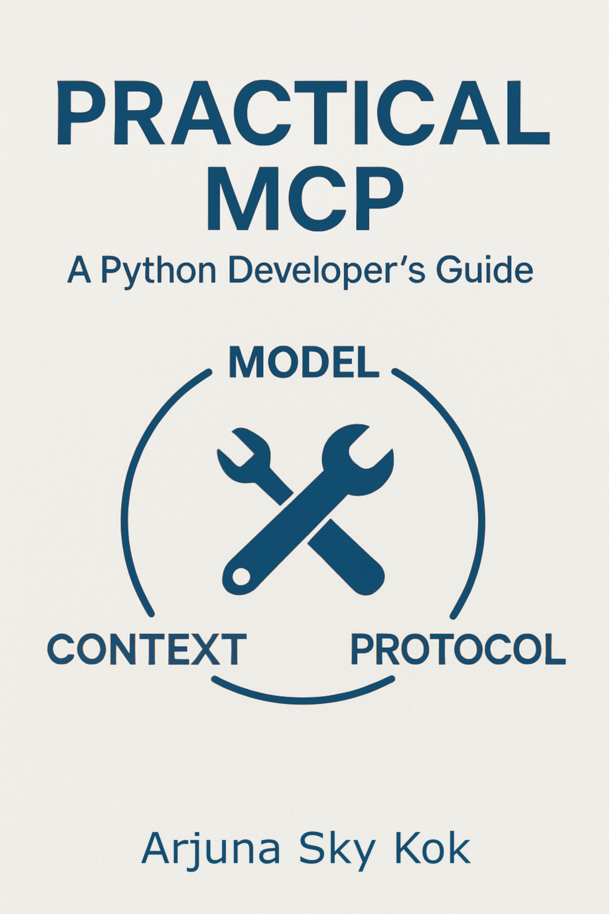
New 📚 Release! Practical MCP: A Python Developer's Guide by Arjuna Sky Kok #books #ebooks #python #programming
Large Language Models are powerful, but they're trapped. They can't access real-time data, call APIs, or even count characters reliably. *Practical MCP* is your guide to setting them free.
Find it on Leanpub!
Link: https://leanpub.com/practical-mcp
Show Original Post
qiita (@qiita@rss-mstdn.studiofreesia.com)
プログラミングで贈る、はなださんへの結婚祝い ー 無限ループ
https://qiita.com/Epika/items/5e24675f201e53fa6a1b?utm_campaign=popular_items&utm_medium=feed&utm_source=popular_items
#qiita #Python #プログラミング #プレゼント #結婚
Show Original Post
pybay (@pybay@fosstodon.org)
🐍PyBay 2025 Speaker Highlight🎤 Chris Neugebauer “Guardrails: An alternative view of safely working in Python”
Python built guardrails to keep devs safe while still empowering them. Chris will show us how they replaced unsafe features and how you could still (ab)use them.
📍 Catch this session at PyBay 2025 in San Francisco on October 18th, 2025
🎟️ Tickets: https://pretix.eu/bapya/pybay-2025/
🎤 More Talks: https://pybay.org/speaking/talk-list-2025/

Show Original Post
diazona (@diazona@techhub.social)
@chksome @Tesseks I wouldn't say that's naive; that's the way I would choose to handle the problem. Make a dataclass (or even a normal class would work fine) to represent items, with attributes for the name and description, and make a list of those.
Show Original Post
leanpub (@leanpub@mastodon.social)
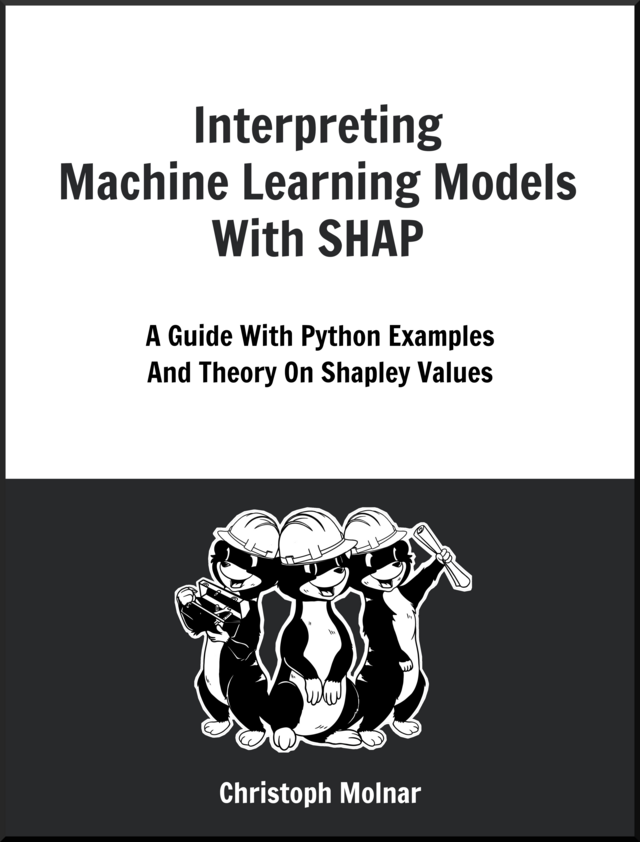
Interpreting Machine Learning Models With SHAP: A Guide With Python Examples And Theory On Shapley Values https://leanpub.com/shap by Christoph Molnar is the featured book on the Leanpub homepage! https://leanpub.com #DataScience #Python #MachineLearning
Master machine learning interpretability with this comprehensive guide to SHAP – your tool to communicating model insights and building trust in all your machine learning applications.
Find it on Leanpub!
Show Original Post
Posit (@Posit@fosstodon.org)
Do you like cleaning data? According to Roger Peng, it was a big part of a data scientist's job 10 years ago, and he misses it!
On the latest Test Set, Roger discusses changes in the field and what to focus on now that AI is taking over rote tasks.
Listen: https://thetestset.co, Spotify, Apple Podcasts
#RStats #Python #DataScience #AI #LLM #GenAI
Show Original Post
haven (@haven@fediscience.org)
Question for people who mostly work in #Rstats but occasionally #python : Is switching to Positron worth it, or do you just use #Rstudio ?
Show Original Post
Tesseks (@Tesseks@mastodon.social)
I'm in the midst of making a smol text adventure rpg in #python. And am kinda stuck at the inventory part. The inventory is just a list that items go into. When I enter the inventory command the list prints. The items can be ""used"" and stuff that's all cool.
I want to display a description alongside the item to the item in the inventory. I don't know how to do that.
I thought i could add values to items in a list. So that when I print the list it appears as:
[Item], [itemdesc]
Show Original Post
mark (@mark@mastodon.fixermark.com)
Today's step in experimenting with text-to-speech: speech-to-text!
Started with a PocketSphinx integration. It's a good start, but definitely has issues with fidelity; right now I'm getting "Newton handwriting recognition" levels of accuracy for a simple "I think you said 'x'" feedback loop query. I'll have to look into tuning it.
There's another tool I found useful that has an emacs integration and runs on the graphics card; I'll have to look into that one as well. Will share its name when I remember it.
Show Original Post
be11amer (@be11amer@mastodon.social)
Here is what happens if I run a python file:
1. I write Python code in main.py.
2. CPython compiles it into bytecode.
3. The Python Virtual Machine executes the bytecode.
4. The OS handles interactions (like printing to the terminal).
Wait, like Java? 🧐
Not really. Here is the difference between them:
• Java: Compile once to bytecode → run everywhere (on JVM).
• Python: Source is compiled each time to bytecode → run on the PVM (but bytecode isn’t a stable distribution format).
#python #coding
Show Original Post