CuratedHackerNews (@CuratedHackerNews@mastodon.social)
Python Steering Council unanimously accepts "PEP 810, Explicit lazy imports"
https://discuss.python.org/t/pep-810-explicit-lazy-imports/104131?page=23
Show Original Post
CuratedHackerNews (@CuratedHackerNews@mastodon.social)
Why We Migrated from Python to Node.js
https://blog.yakkomajuri.com/blog/python-to-node
Show Original Post
driscollis (@driscollis@mastodon.social)
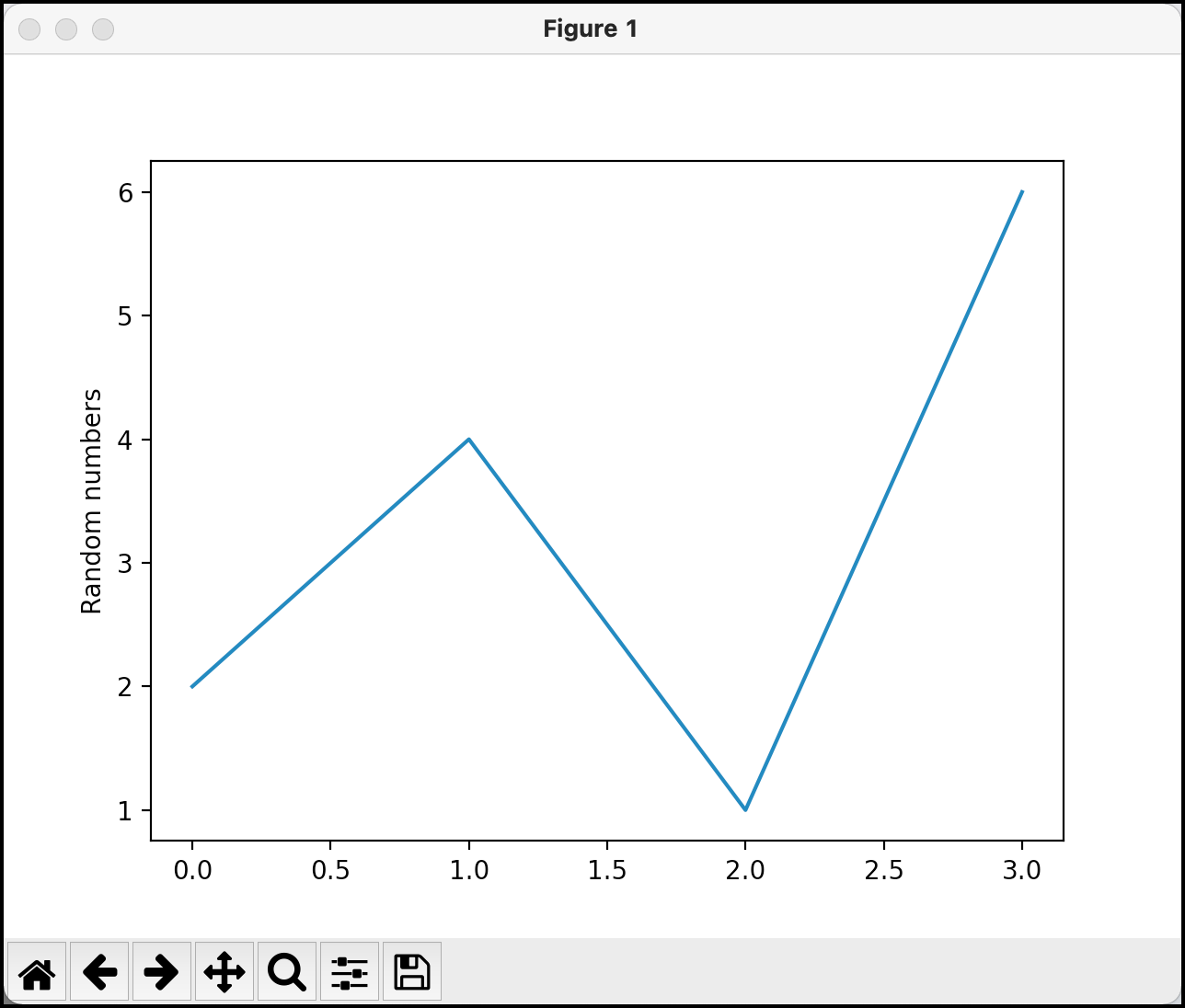
How to create a line plot with matplotlib and #Python
Show Original Post
geospatial (@geospatial@nrw.social)
The Earthkit library (https://earthkit.ecmwf.int/ ) of the #ECMWF looks really interesting and I am considering using it for some of my workflows. However, I wonder if it is mature enough. Has anyone here used it for a project yet? #GIS #Climate #Python #DestinE
Show Original Post
hugovk (@hugovk@mastodon.social)
The Steering Council has accepted PEP 810 (explicit lazy imports) for Python 3.15!
https://discuss.python.org/t/pep-810-explicit-lazy-imports/104131/466
#Python #PEP810 #LazyImports #lazy #Python315
Show Original Post
mdfranz (@mdfranz@infosec.exchange)
I'm not the hiring manager but we'd definitely be working closely together #remote #security #security Operations #python https://ats.rippling.com/bgus-job/jobs/210a7723-3ad2-4ca6-9010-348530fbd002
Show Original Post
fabian (@fabian@floss.social)
#Python folks, What would you prefer? Or something totally different? (Goal: 'namespacing' exceptions into groups.)
Assuming `my_errors` is a module, `MyErrors` is a class, `SomethingNotAllowed` a custom Exception, `something_not_allowed` a function returning an exception, `raise_something_not_allowed` a function raising an exception.
Show Original Post
OtterSide (@OtterSide@mementomori.social)
I have a #python FBX import / pre-processing script that runs in #blender python interpreter in headless mode. In huge tasks it's limited mostly by RAM and Blender's lack of multithreading. RAM issues can be helped by limiting the size/complexity of the FBX files, but still, complex models can take ages to import and pre-process. That process is very RAM intensive, but uses hardly any CPU - the script handles RAM automatically by doing various tasks to limit memory spiking and leaking, but CPU simply cannot be utilized more due to lack of multithreading when running scripts within Blender.
So I started looking into ways to cheat the system and have been developing another script which spawns multiple Blender instances that process the FBX files using my original script, each process processing one file and then moving on to the next in queue, and then merges the results.
It still needs to be tested on production scale models, but so far it looks promising: when testing with a smaller model, it starts 2-4 parallel instances (automatically determined by available memory), and processes and merges the files without getting bottlenecked by a single huge import that ties up the whole process until it's finished.
Now to test it with larger model to see if my computer can handle possible memory spikes caused by merging huge meshes during the pre-process stage, or does it run out of memory. If it works, it should cut down on processing time around 25% to 50% depenging on how the importable models are set up - I hope...
Show Original Post
zelphirkaltstahl (@zelphirkaltstahl@mastodon.social)
Also I find the concept of grid with its `sticky` argument to be powerful and easy to use. Initially I still used some `pack`, but now I think exclusively `grid` and have not needed `place` anywhere yet.
Show Original Post
zelphirkaltstahl (@zelphirkaltstahl@mastodon.social)
At first it seemed weird to me, that in #tkinter for #python one specifies the position of a widget by calling the widget's own method, for example `pack` or `grid`, and that somehow the container widget's layout is then internally managed. Now that I have gotten used to it, I think it is actually very convenient. I don't have to pass around the layout manager and in the limited scope of one widget, I can specify its position in an outer context. Just, need to make sure not to mix pack and grid.
Show Original Post
FLOZz (@FLOZz@mastodon.social)
🚀️ YOGA v1.3.4 released!
YOGA is a CLI tool and and #Python library to convert and optimize images and 3D models.
➡️ https://github.com/wanadev/yoga/releases/tag/v1.3.4
This version brings official support for Python 3.14 🐍️
Show Original Post
ubuntu_touch (@ubuntu_touch@mstdn.social)
Convertir modelo de regresión logística en probabilidades
Calcular predicciones y probabilidad
Curso Aprendizaje Automatico #ML #Python
Evaluación de riesgos
Toma de decisiones
#Anzoategui #Lecheria
Show Original Post