strypey (@strypey@mastodon.nzoss.nz)
Are you an #ActivityPub dev keen to take part in the recently announced W3C Working group (WG)?
Even if you're not affiliated with a current W3C member, you can included as an Invited Expert. There is no application process as such, but you can;
* come to weekly AP issue triage meetings
* take part in Community Group (SocialCG) taskforces
* come to joint WG/CG meetings
If you enjoy participating in these, you can ask for a WG invitation. See the discussion here;
https://mastodon.nzoss.nz/@strypey/116026638014340618
Show Original Post
mapache (@mapache@hachyderm.io)
RE: https://badgefed.org/grant/badgefedorg_135_8_81bd973ba9611087987c50769193a675
@fajfer has helped #badgefed by deploying it to its first Kubernetes environment, smoothing out the rough edges to make it work properly, and now I’m proudly quoting his badge to test quotes!
Show Original Post
newsgroup (@newsgroup@social.vir.group)
New Mastodon Relay Launch! 🚀
Enrich your instance's timeline with high-quality content! We focus on:
🌍 Global News & World Events 📈 Business, Markets & Economy
We support posts up to 500 characters to keep the Fediverse informed with curated international updates.
🔗 Relay URL: https://relay.vir.group/inbox ✅ Status: Open for federation.
Let's build a connected Fediverse together! Boosts appreciated! 🔄
#Mastodon #Fediverse #Relay #SelfHosted #BusinessNews #WorldNews #GlobalEvents #ActivityPub
Show Original Post
mapache (@mapache@hachyderm.io)
RE: https://badgefed.org/grant/badgefedorg_135_8_81bd973ba9611087987c50769193a675
@fajfer has helped #badgefed by deploying it to its first Kubernetes environment, smoothing out the rough edges to make it work properly, and now I’m proudly quoting his badge to test quotes!
Show Original Post
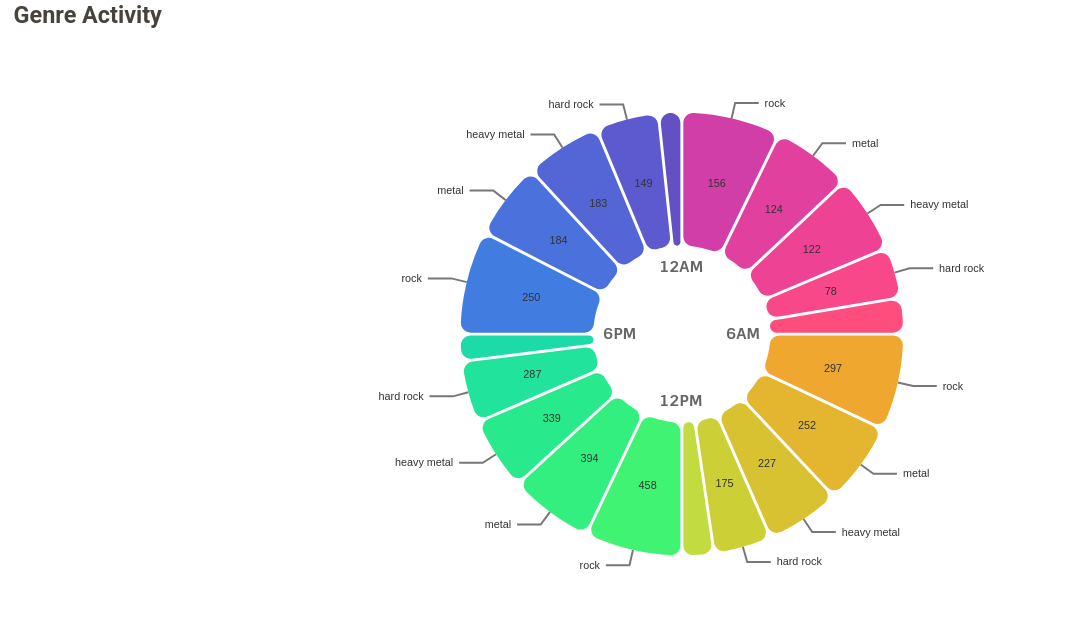
ax11 (@ax11@mastodon.social)
rofl...
#musicbrainz #genre #activitypub #metal
Show Original Post
hongminhee (@hongminhee@hollo.social)
I have deeply mixed feelings about #ActivityPub's adoption of JSON-LD, as someone who's spent way too long dealing with it while building #Fedify.
Part of me wishes it had never happened. A lot of developers jump into ActivityPub development without really understanding JSON-LD, and honestly, can you blame them? The result is a growing number of implementations producing technically invalid JSON-LD. It works, sort of, because everyone's just pattern-matching against what Mastodon does, but it's not correct. And even developers who do take the time to understand JSON-LD often end up hardcoding their documents anyway, because proper JSON-LD processor libraries simply don't exist for many languages. No safety net, no validation, just vibes and hoping you got the @context right. Naturally, mistakes creep in.
But then the other part of me thinks: well, we're stuck with JSON-LD now. There's no going back. So wouldn't it be nice if people actually used it properly? Process the documents, normalize them, do the compaction and expansion dance the way the spec intended. That's what Fedify does.
Here's the part that really gets to me, though. Because Fedify actually processes JSON-LD correctly, it's more likely to break when talking to implementations that produce malformed documents. From the end user's perspective, Fedify looks like the fragile one. “Why can't I follow this person?” Well, because their server is emitting garbage JSON-LD that happens to work with implementations that just treat it as a regular JSON blob. Every time I get one of these bug reports, I feel a certain injustice. Like being the only person in the group project who actually read the assignment.
To be fair, there are real practical reasons why most people don't bother with proper JSON-LD processing. Implementing a full processor is genuinely a lot of work. It leans on the entire Linked Data stack, which is bigger than most people expect going in. And the performance cost isn't trivial either. Fedify uses some tricks to keep things fast, and I'll be honest, that code isn't my proudest work.
Anyway, none of this is going anywhere. Just me grumbling into the void. If you're building an ActivityPub implementation, maybe consider using a JSON-LD processor if one's available for your language. And if you're not going to, at least test your output against implementations that do.
Show Original Post
dansup (@dansup@mastodon.social)
"I gotta go out and get it, want you to know what I did
Want you to know how it went
That's why I keep telling you over and over again
Just let me go
Just let me go, let me bring it home to you
Just let me go, let me bring it home to you
Now and forever, I'll bring it home to you"
https://www.youtube.com/watch?v=vZmNlvfrL4U
Show Original Post
mariusor (@mariusor@metalhead.club)
I started adding #C2S #proxy_url support for #GoActivityPub services and it looks like it's easier than I imagined it initially.
On the server side, implementing the proxyURL handler doesn't need any new additions as it shares 90% code with other handlers that return #ActivityPub objects.
On the client side, I'm creating a new http.RoundTripper that can use the proxyURL transparently for the caller.
As a developer in your client code you only do a regular request for a remote URL, and the round-tripper handles the proxying part transparently if it has all the available bits: a server that supports proxyURL and a valid OAuth2 session towards that server.
Show Original Post
webintents (@webintents@mastodon.social)
Our official website is now live!
#WebIntents #Fediverse #ActivityPub
Show Original Post
post (@post@programming.dev)
Introducing WebIntents: A universal follow button for the fediverse.
https://programming.dev/post/45367818
Show Original Post
kaffeeringe (@kaffeeringe@social.tchncs.de)
 The Fediverse needs to be simpler!
❓ Could a browser plugin make life easier by allowing me to log into my Mastodon instance?
Case 1: A WordPress blog is connected to the Fediverse via an ActivityPub plugin. There is a "Follow" button on the home page. Could the plugin allow me to simply click this button and follow the blog with my Mastodon account?
Case 2: Could I also simply like blog posts on the blog in this way?
3. Case: I want to grant an external service access to my Mastodon account. Currently, I would have to specify my instance there as well, etc.
The plugin could modify the HTML, enter my instance there directly, and then change it so that I can click buttons as easily as I used to with Facebook-buttons.
#FireFox #Mastodon #Fediverse #OpenSource #ActivityPub
Show Original Post
everton137 (@everton137@social.vivaldi.net)
If decentralization is the future of social media, where millions or even billions of people share knowledge, then we can learn a lot from how the Open Knowledge Foundation (@okfn) and the Wikimedia Foundation (@wikimediafoundation) built cross-border, international movements with clear missions.
These two organizations are just two examples, but they demonstrate an important point: decentralization worked because communities were intentionally nurtured, not just because the technology was open.
The Fediverse, powered by the ActivityPub protocol, already has the technical capacity to thrive (UI tweaks aside).
What we still lack is the decentralization of communities, including shared ownership, coordination, and a mission that extends beyond individual instances.
#Fediverse #ActivityPub #Openknowledge #Wikimedia #Decentralization #SocialMedia
Show Original Post